

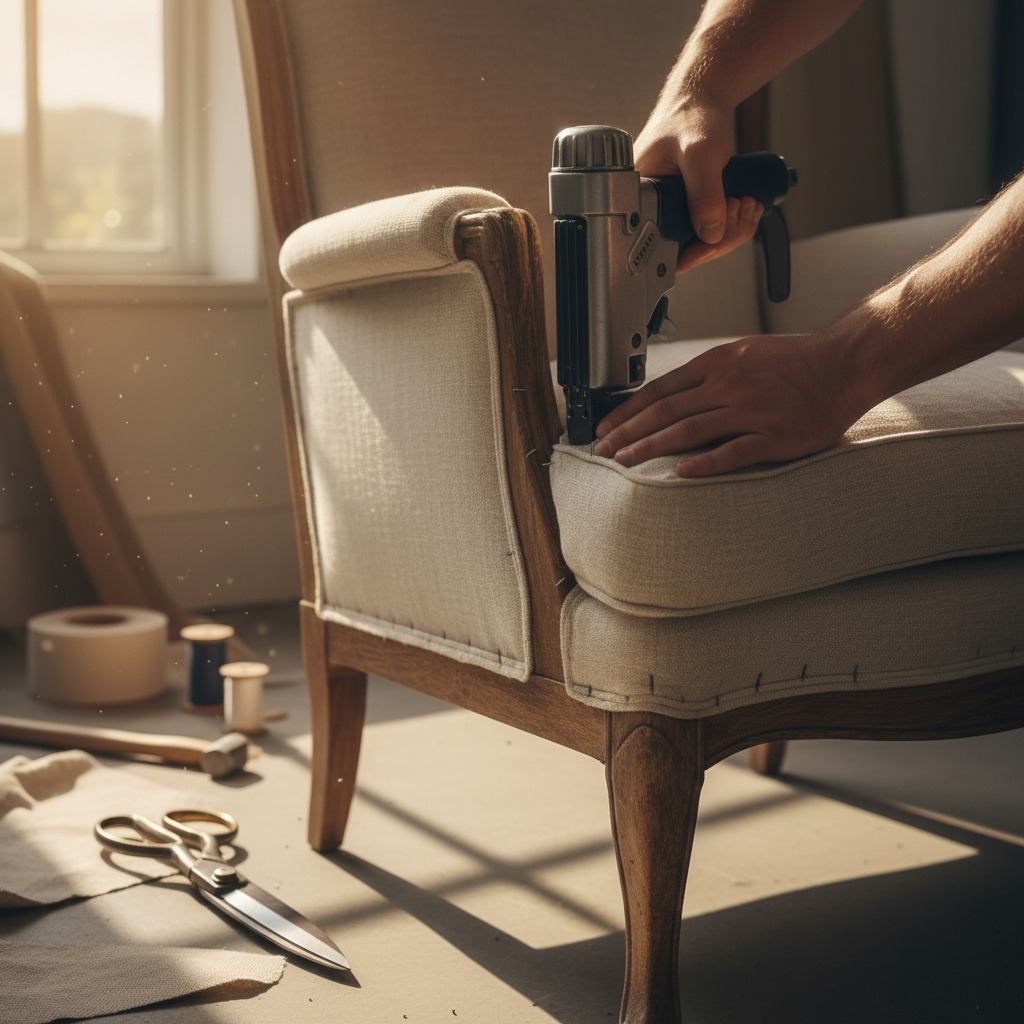
When it comes to reupholstering furniture, there are several important factors to consider to ensure the final result meets your expectations and extends the life of your cherished pieces. Whether you’re revamping a vintage chair or updating a tired sofa, thoughtful planning can make all the difference.
- Assess the Condition of the Furniture
Before diving into reupholstery, examine the frame and structure of the furniture. Check for any damage to the wood, springs, or padding. If the frame is unstable or broken, repairing it might be necessary before you invest in new fabric. A sturdy foundation ensures your piece will last for years to come. - Choose the Right Fabric
Selecting the appropriate fabric is crucial. Consider the furniture’s use—will it be in a high-traffic area, or a formal sitting room? Durable, stain-resistant fabrics like microfiber or leather are ideal for families with children or pets. For decorative pieces, you might opt for luxurious fabrics like velvet or silk. Also, think about color and pattern: lighter colors can brighten a room but may show stains more easily. - Understand the Costs Involved
Reupholstering can be costly, especially if you choose premium fabrics or complex designs. Get quotes from professional upholsterers and factor in additional costs such as padding replacement or frame repairs. Sometimes, the cost of reupholstering might approach or exceed the price of a new piece, so evaluate your budget and the sentimental value of the furniture. - Decide Whether to DIY or Hire a Professional
While DIY reupholstering can be rewarding, it requires skill, tools, and time. If you’re not confident in your abilities, hiring a professional upholsterer is a wise choice. Professionals have the experience to handle intricate details and ensure a polished finish. - Consider the Style and Design
Reupholstering offers a chance to update the style of your furniture. You can maintain the original look or give it a modern twist. Think about the overall decor of your space and choose a fabric and finish that complement your home’s aesthetic. - Check for Environmental Impact
If sustainability is important to you, look for eco-friendly fabrics made from natural fibers or recycled materials. Additionally, reupholstering is itself an environmentally friendly option because it reduces waste by giving old furniture a new life.
In summary, reupholstering furniture is a fantastic way to preserve cherished pieces and refresh your home’s look. By carefully assessing the furniture’s condition, choosing the right fabric, understanding costs, and deciding on the best approach, you can achieve beautiful results that last. Whether you tackle the project yourself or hire a professional, thoughtful planning will ensure your reupholstered furniture becomes a beloved centerpiece in your home.
Leave a Reply